Evacuation drills are where your emergency action plan and building evacuation map get put to the test. But there are right ways and wrong ways to do this.
The biggest mistake is not conducting regular drills at all. Almost as bad: treating drills as “check the box” exercises. This is not about complying with policies and regulations. It’s about preventing injuries and saving lives in an emergency.
Expect the unexpected
One obvious benefit of an evacuation drill is to familiarize building occupants with exit routes and procedures. The goal is an orderly and safe evacuation, rather than a panicked stampede when the alarm sounds.
Emergencies, however, don’t unfold in predictable ways. Alarms can go unnoticed. Primary routes may be blocked. A shift change or visitors can put people in unfamiliar or unexpected locations. Visibility can be reduced by smoke or power outages.
This is where well-executed evacuation drills, following expertly designed emergency evacuation maps, perform a critical role — by providing insight into things that can go wrong, and how to respond when they do.
Common evacuation drill failures
Evacuation drills are not just practice for building occupants. They also test the roles of safety wardens and others assigned responsibilities in emergencies. That starts even before the drill with training that is required by the federal Occupational Safety and Health Administration (OSHA).
Two ways a drill can fail are inadequate training and a lack of accountability for every role. Your emergency action plan needs to identify who does the training, who updates the plan, who organizes the drills, who serves as wardens, who does the headcount, who evaluates the drill.
Other common failures:
- Announcing drills ahead of time
- Treating every drill the same, without considering alternative exit routes
- Forgetting everyone who could be in a building at different times, including visitors, contractors, the overnight shift
- Neglecting to conduct accurate headcounts after evacuation
- Not testing plans to assist people with vision, hearing or mobility impairments
- Not assessing the adequacy of assembly areas outside the building
- Focusing only on the time elapsed between alarm and evacuation
- Assigning evaluators only at main exits, rather than at key locations throughout the building
- Failing to conduct a thorough evaluation and not adjusting the emergency action plan accordingly
Measuring drill success
An evacuation drill does not need to be fast and flawless to be considered a success. In fact, identifying problems with the evacuation is one of the goals of a drill. That is how improvements are made.
The time it takes to evacuate is important, but that only measures how long it took the group to move out of the building under controlled circumstances. Other measures to consider:
Did the alarm succeed in notifying all occupants?
Check with evacuees afterward how they were alerted. Did they hear the alert, see visual indicators, or notice other people leaving? Did they know the difference between a warning to evacuate vs. shelter in place, and how to respond accordingly?
Were alternative routes available and easily followed?
Drill organizers can consider adding safe variables — such as posting an evaluator at a key location to tell evacuees they must take a secondary route identified on the evacuation map. The evaluators can later report on how this was handled.
Did safety wardens and other leaders know and execute their roles?
OSHA requires employers to “designate and train employees to assist in a safe and orderly evacuation of other employees.” This is an opportunity to see if more training is needed.
Is the assembly area adequate?
Confirm there is enough space for all evacuees to gather safely. Can emergency response crews access the area? Does it work just as well at night or during bad weather?
Is the headcount accurate?
Responsible team members need to know everyone who must be accounted for — not just employees but visitors, contractors, and everyone who was in the building when the drill began. This can be tested during the drill, by treating one person as missing, then checking that procedures are followed to resolve the discrepancy.
After the drill: assess and improve
It’s important to conduct drills with the same level of thought and effort that went into creating your building evacuation maps and emergency action plan. Drills that are done right will provide valuable insights. If they are done wrong, your plan may provide little more than a false sense of security.
Every drill should include an evaluation. Each person responsible should be identified and must know the information they are expected to collect. These should be concrete observations, detailing the area of the building involved, and exactly how the drill followed or deviated from the emergency action plan.
After the findings are assembled, leaders should use the final report to address solutions and improvements. These can range from equipment and map posting to operational management. Once improvements are made, the emergency action plan can be tested again.
Using maps to improve participation and outcomes
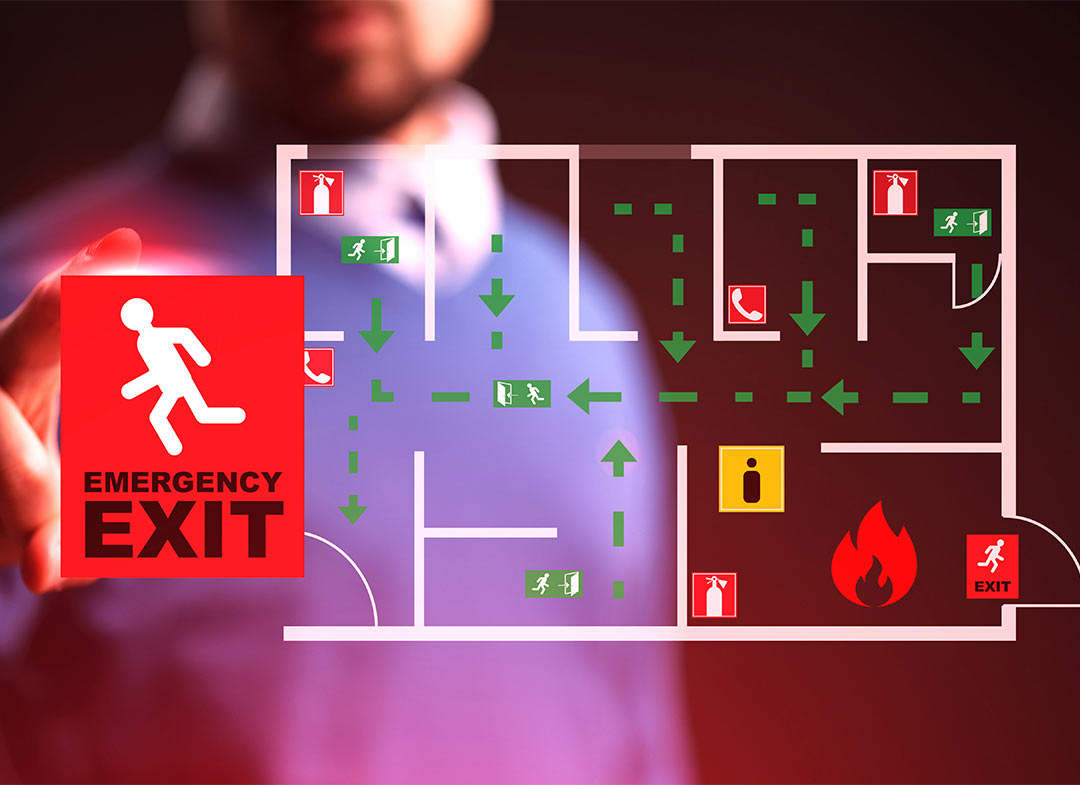
Training and drills are important to keep evacuation smooth and orderly. Another important way to keep evacuation information easily accessible and fresh in employee memory is to post clear, intuitive safety maps in key areas of the workplace.
Safety maps offer visual clarity to ease evacuation concerns for employees and visitors. This also helps during drills, allowing you to assess the effectiveness of your emergency action plan.
Many people will instinctively want to leave the way they entered. That may not be the safest route. And very few people will instinctively know the location of the nearest fire extinguisher, or the location of a severe weather shelter.
Maps also are a tool to ensure that all employees are trained in the function and elements of your emergency action plan. The experts at Building Maps know how to make an emergency evacuation map that accentuates your OSHA-compliant evacuation procedures, including incorporating them into training and drills.
The illustrators at Building Maps are trained in life safety and are familiar with codes and standards from OSHA, NFPA, ICC, and more. We create simple, easy-to-understand building evacuation maps that can help save lives in an emergency. If you’re ready to clarify your emergency action plan with a safety map or need to update your existing map based on results of an evacuation drill, we can help.